
Best Low-Maintenance Plants for Indian Gardens
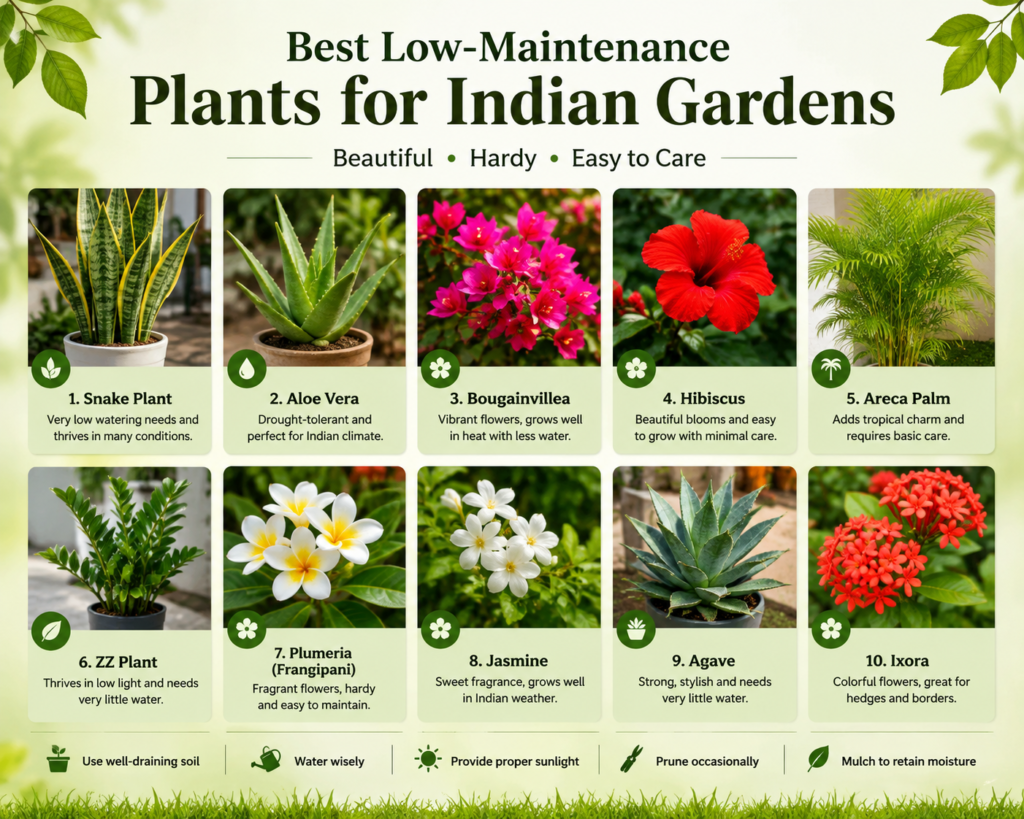
Creating a beautiful garden doesn’t always mean spending hours every week watering, pruning, and caring for plants. With the right plant selection, you can enjoy a green and attractive outdoor space while keeping maintenance to a minimum. India’s diverse climate provides excellent opportunities for growing many hardy and low-maintenance plants. Whether you have a small home garden, a balcony, a terrace, or a large landscape, choosing plants that suit your local climate and soil conditions can make gardening much easier. Here are some of the best low-maintenance plants for Indian gardens. 1. Snake Plant Snake plants are among the easiest plants to maintain. They are known for their upright leaves and ability to tolerate different indoor and outdoor conditions. They can handle periods of low watering and generally don’t require frequent attention. Why choose it? Requires little watering Tolerates different light conditions Grows well in containers Needs minimal pruning Snake plants are especially useful for adding greenery to entrances, balconies, patios, and shaded garden areas. 2. Aloe Vera Aloe vera is a hardy succulent that requires relatively little maintenance once established. Its thick leaves store water, allowing the plant to tolerate dry conditions. It generally prefers bright light and well-draining soil. Why choose it? Low water requirements Easy to grow Suitable for containers Handles warm conditions well Avoid keeping the soil constantly wet, as excessive moisture can cause root problems. 3. Bougainvillea If you want a colorful garden without demanding daily maintenance, bougainvillea can be an excellent choice. Its vibrant bracts can add strong visual appeal to walls, fences, gates, and garden structures. Why choose it? Handles heat well once established Requires relatively little watering Provides excellent color Works well along walls and boundaries Bougainvillea generally performs best in sunny locations with good drainage. 4. Hibiscus Hibiscus is a popular choice for Indian gardens because of its attractive flowers and suitability for warm climates. With adequate sunlight and appropriate watering, hibiscus can provide beautiful blooms while requiring relatively straightforward care. Why choose it? Attractive flowers Suitable for many warm climates Can be grown in containers or garden beds Works well as a decorative shrub Regular pruning can help maintain its shape and encourage healthy growth. 5. Areca Palm Areca palms are popular for creating a tropical appearance around homes, offices, and outdoor spaces. They can be used to add height and greenery to garden corners, entrances, patios, and other landscape areas. Why choose it? Attractive tropical appearance Useful for creating greenery and screening Suitable for containers or garden beds Relatively easy to maintain when planted in suitable conditions Provide appropriate light and avoid consistently waterlogged soil. 6. ZZ Plant The ZZ plant is known for being particularly tolerant of neglect. It stores water in its underground structures, making it suitable for people who don’t have time for frequent watering. It is commonly used in shaded or partially shaded areas. Why choose it? Low watering requirements Requires little pruning Handles lower-light conditions Suitable for containers For outdoor use, choose a location that suits the plant’s light and temperature requirements. 7. Plumeria (Frangipani) Plumeria is well suited to many warm Indian landscapes and is loved for its fragrant, attractive flowers. Once established in a suitable location, it can be relatively easy to care for. Why choose it? Beautiful and fragrant flowers Suitable for warm climates Works well as a feature tree Relatively drought-tolerant once established Plant it in a sunny location with good drainage and enough space for the tree to develop. 8. Jasmine Jasmine is an excellent choice if you want fragrance as well as greenery. Its flowers can add a pleasant scent to outdoor spaces, and several jasmine varieties can be grown in Indian gardens. Why choose it? Fragrant flowers Attractive appearance Suitable for warm conditions Can be trained along supports Some varieties benefit from regular pruning to maintain their shape and encourage healthy growth. 9. Agave Agave is a strong choice for gardeners looking for a hardy, low-water landscape plant. Its architectural leaves can add a modern appearance to rock gardens, borders, and landscape beds. Why choose it? Requires little water Handles sunny conditions Distinctive appearance Minimal pruning requirements Because some varieties have sharp leaves, consider their location carefully, particularly if children or pets frequently use the garden. 10. Ixora Ixora is a popular flowering shrub that can add vibrant color to Indian gardens. It can work well as a border plant, hedge, or decorative shrub when planted in suitable conditions. Why choose it? Colorful flowers Useful for borders and hedges Attractive foliage Suitable for warm climates Regular but not excessive watering and occasional pruning can help maintain a healthy appearance. How to Choose Low-Maintenance Plants for Your Garden The best low-maintenance plant isn’t necessarily the plant that needs the least water. It is the plant that is well suited to your garden’s conditions. Before choosing plants, consider: Sunlight Observe how much sunlight your garden receives throughout the day. Some plants prefer full sun, while others perform better in partial shade. Soil and Drainage Many low-maintenance plants, especially succulents, prefer well-draining soil. Poor drainage can cause root problems even when the plant itself is naturally hardy. Water Availability Choose plants according to the amount of water available and your ability to maintain a regular watering schedule. Space Always consider the plant’s mature size. A plant that looks small at a nursery may eventually become a large shrub or tree. Local Climate India has many different climate zones. A plant that performs well in one region may require different care in another. Select varieties that are appropriate for your local conditions. Tips for Maintaining a Low-Maintenance Garden Choosing hardy plants is only the first step. Good garden planning can reduce maintenance even further. Use mulch: Mulching can help conserve soil moisture and reduce weed growth. Group plants wisely: Place plants with similar sunlight and watering requirements together. Avoid overcrowding: Give plants enough room to grow so they don’t require excessive pruning. Use efficient irrigation: Drip irrigation and other
Why Professional Garden Maintenance Is Worth It
A beautiful garden can make your home or business property more attractive, welcoming, and enjoyable. But keeping a garden looking its best requires regular time, effort, knowledge, and the right equipment. Many homeowners try to handle garden maintenance themselves, but professional garden maintenance can often save time, reduce long-term costs, and produce better results. Here are some of the key reasons why professional garden maintenance is worth the investment. 1. Saves You Time Garden maintenance can quickly become a time-consuming task. Mowing lawns, trimming hedges, removing weeds, pruning plants, watering, cleaning garden areas, and maintaining equipment all require regular attention. Hiring professionals allows you to spend that time on work, family, hobbies, or simply enjoying your garden instead of maintaining it. 2. Professional Knowledge and Experience A healthy garden requires more than simply watering plants and cutting grass. Professional gardeners understand: Which plants are suitable for different conditions When and how to prune plants How to maintain lawns properly How to identify common pests and diseases How much water different plants need How to improve soil and drainage This knowledge helps prevent common gardening mistakes and keeps your landscape healthier. 3. Better-Looking Garden Regular professional maintenance can make a noticeable difference to the appearance of your property. Professionals can keep your: Lawn neat and healthy Hedges properly shaped Trees and shrubs maintained Flower beds clean Pathways free of leaves and debris Outdoor areas looking organized A well-maintained garden creates a positive first impression for visitors, customers, and neighbors. 4. Helps Keep Plants Healthy Plants require different types of care at different stages of their growth. Incorrect pruning, overwatering, underwatering, or poor fertilization can damage plants. Professional maintenance helps identify problems early and provide the appropriate care. Regular inspections can also help spot signs of pests, diseases, nutrient deficiencies, or other problems before they become serious. 5. Reduces Long-Term Costs At first, professional garden maintenance may seem like an additional expense. However, regular maintenance can help prevent larger and more expensive problems. For example, neglected trees may require major pruning, overgrown gardens can take more effort to restore, and unhealthy plants may need to be replaced. Preventive maintenance is often more affordable than repairing a severely neglected landscape. 6. Access to the Right Equipment Professional garden maintenance requires various tools and equipment, such as lawnmowers, hedge trimmers, pruning tools, blowers, and other landscaping equipment. Purchasing, storing, cleaning, and maintaining all these tools can be expensive. Professional gardeners already have the appropriate equipment for different maintenance tasks, saving you the cost and hassle of buying everything yourself. 7. Regular and Consistent Maintenance One of the biggest challenges of maintaining a garden yourself is consistency. You might have time to maintain the garden one weekend but be too busy the next few weeks. As a result, weeds grow, grass becomes overgrown, and plants may not receive the care they need. A professional garden maintenance service can provide a regular schedule, helping your landscape receive consistent attention throughout the year. 8. Improves Property Appearance and Value A well-maintained outdoor space can improve the overall appearance of a property. For homeowners, an attractive garden can make the property more enjoyable and improve curb appeal. For businesses, a clean and professional landscape can create a better impression on customers and visitors. Good landscaping can therefore be a valuable investment in your property. 9. Safer Outdoor Spaces Overgrown branches, slippery leaves, uneven grass, weeds, and poorly maintained pathways can create potential hazards. Regular garden maintenance helps keep outdoor areas cleaner and more manageable. Professionals can also identify maintenance issues that may otherwise be overlooked. 10. More Time to Enjoy Your Garden Perhaps the biggest benefit is simple: you get to enjoy your garden instead of constantly working on it. Imagine coming home to a neatly trimmed lawn, healthy plants, clean pathways, and well-maintained garden beds without spending your weekend doing all the work. Professional maintenance gives you more time to relax and enjoy the outdoor space you’ve invested in. 🌿 Is Professional Garden Maintenance Worth It? For many homeowners and businesses, the answer is yes. Professional garden maintenance provides more than just mowing and trimming. It combines regular care, horticultural knowledge, proper equipment, and consistent attention to keep your landscape healthy and attractive. If you want a garden that looks great without spending your valuable time maintaining it, professional garden maintenance can be a smart and worthwhile investment. A beautiful garden doesn’t happen by accident—it happens through consistent care.
Lawn Care Tips for a Healthy, Green Garden
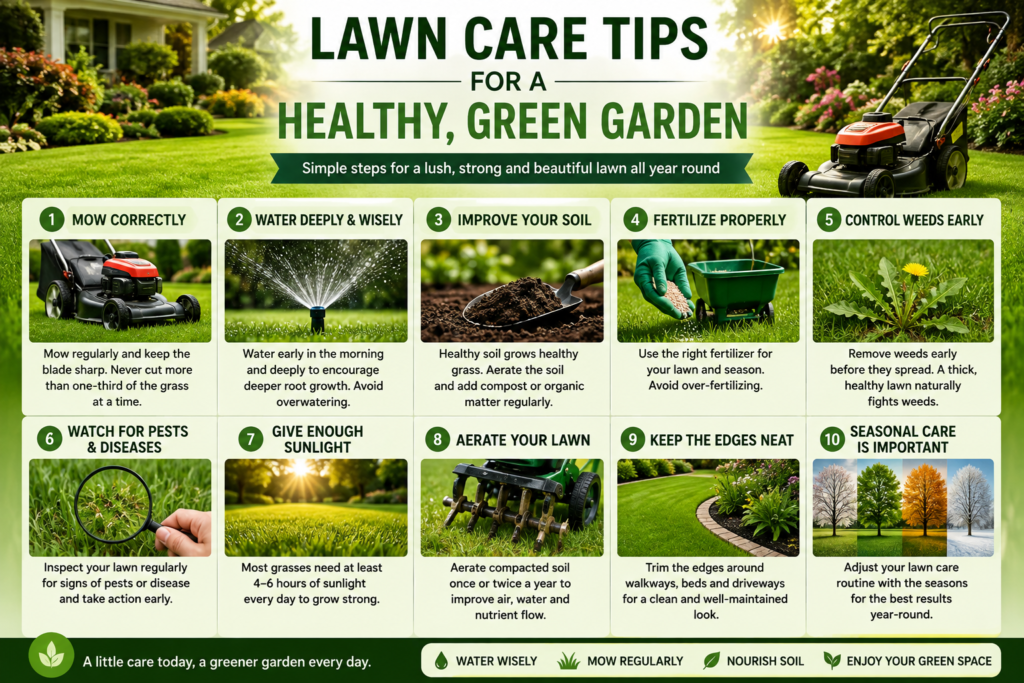
A lush, green lawn can make any garden look fresh, attractive, and inviting. But keeping grass healthy requires more than occasional watering and mowing. Proper mowing, watering, fertilization, soil care, and regular maintenance all play an important role in creating a strong and beautiful lawn. Whether you have a small home garden or a large outdoor space, these simple lawn care tips can help you maintain a healthier, greener lawn. 1. Mow Your Lawn Correctly Regular mowing keeps your lawn neat and encourages healthy grass growth. However, cutting the grass too short can weaken the plants and make them more vulnerable to heat, pests, and weeds. How to avoid problems: Keep your mower blades sharp. Avoid removing too much grass at once. Adjust the mowing height according to your grass type. Avoid mowing when the soil is extremely wet. Remove excessive grass clippings when necessary. A good rule is to mow regularly rather than allowing the grass to become extremely overgrown. 2. Water Your Lawn Properly Water is essential for a healthy lawn, but overwatering can be just as harmful as underwatering. Frequent, shallow watering can encourage weaker root systems, while appropriate deep watering can help roots grow deeper into the soil. Watering tips: Water according to the weather and soil conditions. Water early in the morning when possible. Avoid creating standing water. Check whether the soil actually needs water before irrigating. Make sure your lawn has good drainage. During hot weather, your lawn may require more attention, while rainy periods may require less watering. 3. Improve Your Soil Healthy grass depends on healthy soil. Compacted or nutrient-poor soil can prevent roots from receiving enough air, water, and nutrients. If your lawn looks thin, patchy, or unhealthy despite regular care, the soil may be part of the problem. What you can do: Consider: Adding organic compost where appropriate Improving soil drainage Aerating compacted areas Removing excessive thatch Testing soil before applying large amounts of fertilizer Healthy soil provides a stronger foundation for healthy grass. 4. Use Fertilizer Carefully Fertilizer can provide nutrients that support lawn growth, but applying too much can damage grass and contribute to unnecessary nutrient runoff. The right fertilizer and application rate depend on your grass type, soil condition, climate, and growing season. Best practice: Follow the fertilizer manufacturer’s instructions and avoid applying more than recommended. If you’re unsure what your lawn needs, consider getting professional advice or a soil test. 5. Control Weeds Early Weeds compete with grass for sunlight, water, nutrients, and space. A few weeds can quickly become a larger problem if they are ignored. How to manage weeds: Remove weeds when they are young. Maintain a dense, healthy lawn. Avoid overwatering. Improve soil and drainage where necessary. Use appropriate weed-control methods when needed. A healthy lawn naturally has a better chance of competing with unwanted plants. 6. Watch for Pests and Lawn Diseases Brown patches, yellow grass, holes in leaves, or unusual growth may sometimes indicate pests or disease. Don’t immediately assume that every brown patch means the lawn needs more water. Problems can also be caused by insects, fungal diseases, poor drainage, compacted soil, or excessive fertilizer. What to do: Inspect affected areas regularly and try to identify the underlying cause before treating the lawn. Early action can prevent a small problem from spreading. 7. Give Your Lawn Enough Sunlight Most lawn grasses need adequate sunlight to grow well. Areas under dense trees, beside tall walls, or in heavily shaded locations may struggle to produce thick grass. If certain areas consistently remain thin, consider whether insufficient sunlight is the cause. You may need to choose a more shade-tolerant grass variety or redesign the area with suitable plants and landscaping features. 8. Don’t Forget Lawn Edges A beautifully maintained lawn can still look untidy if the edges are overgrown. Regularly trimming the edges around: Walkways Driveways Flower beds Garden borders Buildings can give your entire landscape a cleaner and more professional appearance. 9. Adjust Your Lawn Care to the Season Your lawn’s needs change throughout the year. During hot weather, focus on appropriate watering and protecting the grass from excessive stress. During rainy periods, pay attention to drainage and avoid unnecessary irrigation. Seasonal maintenance helps your lawn stay healthy rather than following exactly the same routine throughout the year. 10. Maintain Your Lawn Regularly The biggest secret to a healthy green lawn is consistency. Instead of waiting until the lawn becomes overgrown, dry, or full of weeds, create a regular maintenance schedule. Your routine may include: Mowing Watering Fertilizing Weed control Aeration Soil improvement Pest monitoring Edge trimming Seasonal maintenance Regular care makes lawn maintenance easier and helps prevent expensive problems. 🌿 A Healthy Lawn Starts With Good Care A green, healthy lawn doesn’t happen overnight. It requires the right combination of water, sunlight, nutrients, healthy soil, proper mowing, and consistent maintenance. By following these lawn care tips, you can create an outdoor space that looks healthier and more attractive throughout the year. If maintaining your lawn takes more time than you have available, professional garden and landscaping services can help keep your outdoor space neat, healthy, and beautiful. A beautiful garden starts with healthy grass—and healthy grass starts with proper care.
7 Common Landscaping Mistakes and How to Avoid Them
A beautiful landscape can completely transform your home or business property. But creating and maintaining an attractive garden is more than simply planting flowers and watering the lawn. Poor planning, incorrect plant selection, and inadequate maintenance can quickly turn a beautiful outdoor space into a costly problem. Whether you are designing a new garden or improving an existing one, avoiding common landscaping mistakes can save you time, money, and effort. Here are 7 common landscaping mistakes and practical ways to avoid them. 1. Choosing the Wrong Plants One of the most common landscaping mistakes is selecting plants based only on how they look. A plant may look beautiful in a nursery but struggle to survive in your garden because of unsuitable sunlight, soil, temperature, or water conditions. How to avoid it: Before purchasing plants, consider: How much sunlight the area receives Soil type and drainage Local climate Water requirements Available space Expected plant height and spread Choosing plants that naturally suit your local environment will help create a healthier and easier-to-maintain garden. 2. Poor Garden Planning Planting without a proper plan can result in overcrowded beds, empty spaces, blocked pathways, or plants growing too close to buildings. A good landscape should consider both appearance and functionality. How to avoid it: Create a basic landscape plan before planting. Think about: Walkways and entrances Seating areas Trees and shade Flower beds Lawn areas Drainage Future plant growth Planning ahead can prevent expensive changes later. 3. Overwatering Your Plants More water does not necessarily mean healthier plants. Overwatering can damage roots, encourage fungal diseases, and waste water. Different plants have different watering requirements. How to avoid it: Water according to the needs of your plants and the local weather conditions. Check the soil before watering, and make sure your garden has adequate drainage. Using drip irrigation or other efficient watering methods can also help reduce water waste. 4. Ignoring Soil Quality Healthy plants start with healthy soil. Many homeowners focus on plants and lawn appearance while overlooking the condition of the soil. Poor soil can result in weak growth, yellow leaves, and unhealthy plants. How to avoid it: Improve soil quality by: Adding suitable organic matter or compost Checking drainage Using appropriate fertilizers Maintaining healthy soil structure If you are unsure about your soil, consider getting it tested before making major planting decisions. 5. Planting Without Considering Future Growth A small tree or shrub may look perfectly sized when you plant it, but it can become much larger over time. Planting trees too close to buildings, walls, power lines, or other plants can create maintenance and safety problems later. How to avoid it: Always check the mature height and width of a plant before planting. Give trees and shrubs enough space to grow naturally. This simple step can prevent excessive pruning, damaged structures, and overcrowding. 6. Neglecting Regular Maintenance Even the best-designed landscape needs regular care. Overgrown plants, weeds, dry lawns, and untrimmed hedges can quickly make a garden look untidy. How to avoid it: Create a regular maintenance routine that includes: Lawn mowing Hedge and shrub trimming Weed removal Pruning Fertilization Pest monitoring Cleaning garden areas Checking irrigation systems Regular maintenance is usually easier and less expensive than trying to restore a neglected garden. 7. Focusing Only on Appearance A landscape should look beautiful, but it should also be practical. For example, a garden with too much lawn may require significant watering and mowing. Similarly, delicate plants placed in high-traffic areas may be easily damaged. How to avoid it: Think about how the space will actually be used. Choose durable plants for busy areas, provide comfortable pathways, consider shade, and select landscaping features that fit your lifestyle and maintenance budget. Create a Landscape That Lasts Avoiding these common landscaping mistakes can help you create an outdoor space that is beautiful, healthy, practical, and easier to maintain. Good landscaping starts with careful planning and continues with proper plant selection, soil preparation, watering, and regular maintenance. If you are unsure where to begin, getting professional landscaping advice can help you make better decisions and avoid costly mistakes.